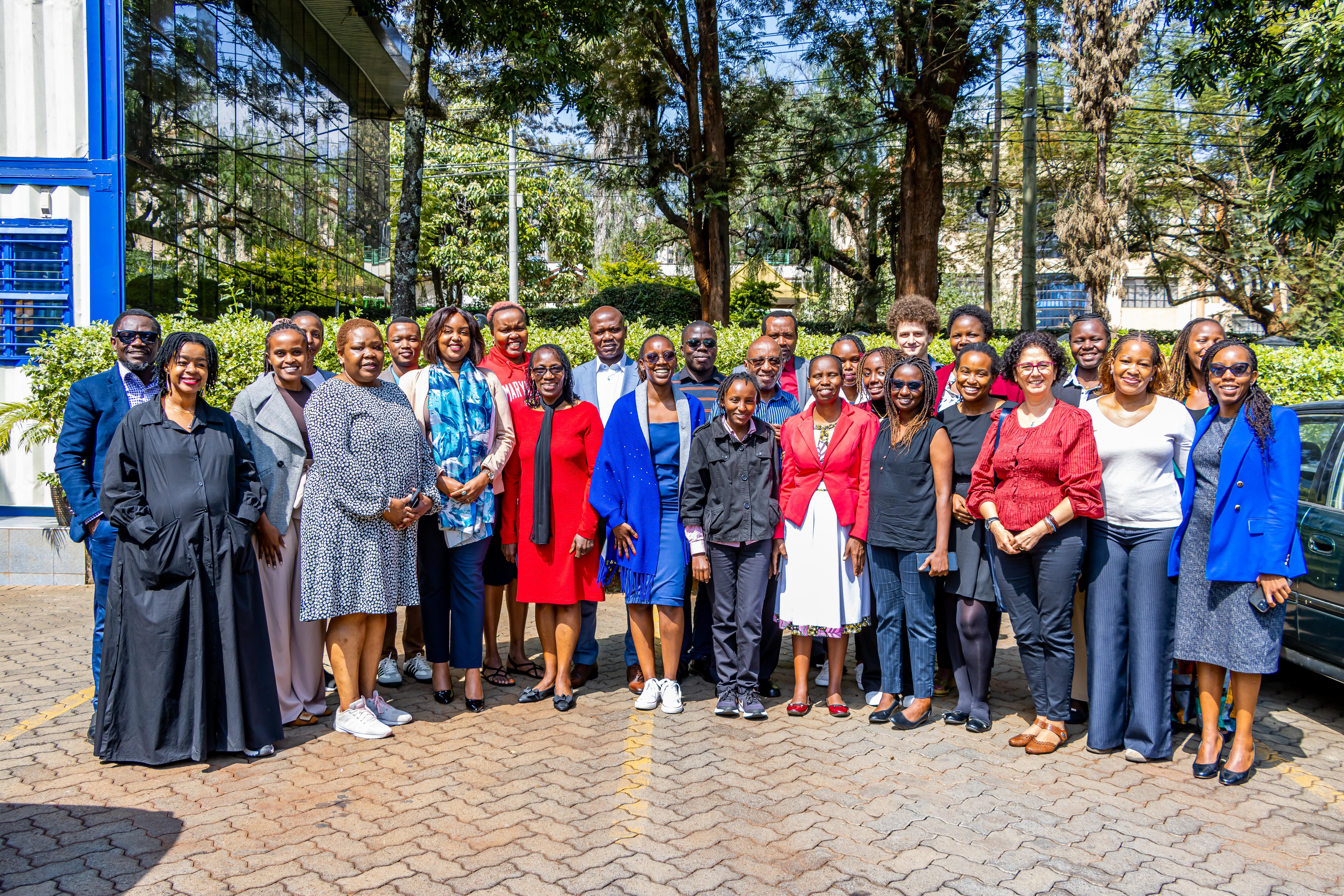
For three days, women entrepreneurs, innovators, and professionals came together to reflect on six months of learning, colaboration, and growth that had already been building the ski ls, networks, and confidence needed to thrive in Kenya's fast-growing electric mobility sector
·2 mins read
For three days, women entrepreneurs, innovators, and professionals came together to reflect on six months of learning, colaboration, and growth that had already been building the ski ls, networks, and confidence needed to thrive in Kenya's fast-growing electric mobility sector. The workshop marked the culmination of a six-month Women in e-Mobility incubation initiative implemented by the Kenya Climate Innovation Center (KCIC), Coventry University UK, the African Centre for Technology Studies (ACTS), and Coventry University Social Enterprise (CUSE), with funding from the British Council. Through practical learning, evidence-based research, policy dialogue, and emerging technologies, it equipped participants with the knowledge and tools to pursue opportunities in one of Kenya's fastest-growing green industries. The incubation programme forms part of the broader project, The Transformative Power of Electric Mobility Technology in Kenya: Understanding and Empowering Women Entrepreneurs. The initiative seeks to understand the barriers women face in the e-mobility sector, generate evidence on the support they need, and strengthen their capacity to build successful businesses. Through research, policy engagement, and entrepreneurship training, the project is helping shape a more inclusive e-mobility ecosystem while supporting Kenya's transition to sustainable transport. The workshop opened with an immersive learning experience at Kiri EV, a KCIC-supported enterprise that has grown from an early-stage prototype into a thriving electric mobility business. Today, the company retails electric motorcycles, operates battery charging and swapping stations, and serves as a practical learning hub for aspiring entrepreneurs. Walking through the facility, participants experienced first-hand what it takes to build and scale an e-mobility enterprise. They explored the technical aspects of electric motorcycles and battery systems while gaining practical insights into business operations, customer acquisition, revenue generation, and commercial growth. Throughout the day, they engaged directly with the Kiri EV team, asking questions, exchanging ideas, and learning from a business that has successfuly navigated the journey from innovation to commercialization. The second day brought together researchers, policymakers, industry leaders, and entrepreneurs for a conference exploring women's participation in Kenya's e-mobility sector. Opening the conference, Ernest Chitechi, KCIC's Head of Corporate Services, underscored the importance of creating an enabling environment where women can actively contribute to the country's green transition. Drawing on findings from the project's research, experts from Coventry University and ACTS examined Kenya's e-mobility ecosystem through a gender lens. The presentations explored women's perceptions of the value chain, emerging business opportunities, and the institutional, cultural, and technical barriers that continue to limit participation. Discussions also examined policy milestones, infrastructure development, grid integration, and the support systems needed to help more women enter and grow within the sector. The afternoon shifted from research to lived experience as participants reflected on their entrepreneurial journeys. Their conversations highlighted chalenges ranging from access to finance and technical ski ls to the need for infrastructure that better responds to women's realities. Emily Ochanda of Siganda Limited emphasized that inclusion must extend beyond policy and into the design of e-mobility infrastructure. "When we are talking about women, safety becomes a key point. Therefore, infrastructure around charging points should be strategicaly located in wel-lit areas, giving women a sense of safety and comfort," she said. The discussion reinforced a central message of the programme: building an inclusive e-mobility ecosystem requires more than increasing women's participation—it also means designing systems, services, and infrastructure that respond to their lived experiences. Participants also pitched their business ideas before a panel of experts, receiving practical feedback that helped them refine their value propositions and strengthen their business models. For programme participant Dorcas Moraa, the six-month incubation journey transformed both her business idea and her confidence as an entrepreneur. "The programme chalenged us to sharpen our vision and refine our business models. What began as an idea has evolved into a clearer, more practical pathway for launching my e-mobility venture that now enables women to get bikes and earn money. The research findings, mentorship, and interactions with industry experts gave me greater confidence to innovate with purpose and turn ideas into action," she said. The day concluded with a certificate award ceremony recognizing six months of learning, colaboration, and growth. The final day introduced participants to another technology shaping the future of entrepreneurship—artificial inte ligence. Through practical sessions, they explored digital tools that can improve productivity, strengthen customer engagement, support marketing, and enable better business decision-making, equipping them with ski ls that extend beyond the e-mobility sector. While the workshop marked the end of the incubation programme, it also marked the beginning of a new chapter for the participants. Over six months, they strengthened their technical knowledge, refined their business models, expanded their professional networks, and gained the confidence to pursue opportunities within Kenya's growing e-mobility ecosystem. As Kenya accelerates its transition to cleaner transport, ensuring women are not only beneficiaries but also innovators, entrepreneurs, and industry leaders wi l be essential to building a more inclusive green economy. Through the partnership between KCIC, Coventry University UK, ACTS, and CUSE, the Women in e-Mobility programme is helping make that vision a reality—creating pathways for more women to lead the future of sustainable mobility.