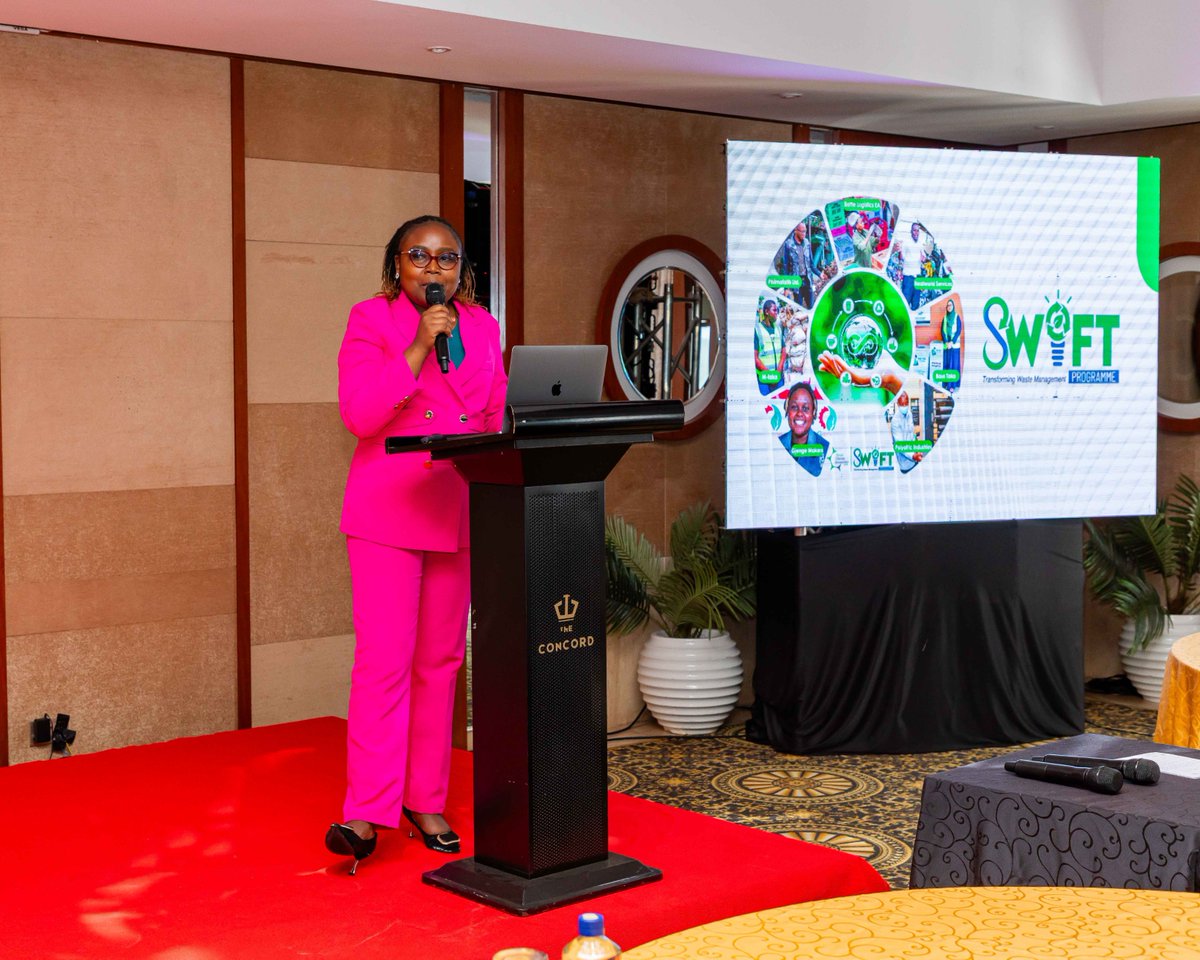
The Sustainable Waste Innovation for a Future in Transition (SWIFT) Programme is a three-year initiative (2023–2026) implemented by the Kenya Climate Innovation Center (KCIC) with funding from the IKEA Foundation. The programme targets Small and Medium Enterprises (SMEs) in Kenya’s waste management sector, aiming to transform it through innovative, circular economy business models.
Overview
The Sustainable Waste Innovation for a Future in Transition (SWIFT) Programme is a three-year initiative (2023–2026) implemented by the Kenya Climate Innovation Center (KCIC) with funding from the IKEA Foundation. The programme targets Small and Medium Enterprises (SMEs) in Kenya’s waste management sector, aiming to transform it through innovative, circular economy business models.
In its first year of implementation, SWIFT onboarded 57 enterprises that received tailored support, including business advisory, technical assistance, compliance for market access, sustainability integration, and policy engagement. Over its full cycle, the programme will support 110 enterprises, generate more than 6,000 direct and indirect jobs, improve the livelihoods of 5,000 households, and enable enterprises to generate up to USD 10 million in revenue.
To deliver systemic impact, SWIFT collaborates with the national government and five counties: Nairobi, Mombasa, Nakuru, Kisumu, and Uasin Gishu on the policy front to strengthen waste management policies and frameworks that incentivize private sector engagement in sustainable and circular economy practices.
The SWIFT Programme supports enterprises through two pathways: Incubation for early-stage businesses with a prototype or minimum viable product, focusing on market validation and commercialisation; and Acceleration for growth-stage enterprises with proven traction, emphasising scaling and investor readiness. In addition to advisory and technical support, SWIFT provides financial assistance through matching grants of up to USD 10,000, repayable grants of up to USD 40,000, and facilitation of external financing via transaction advisory and investor readiness training.
Technical support
Expected Outcomes
Development of innovative and scalable business models in waste management.
Strengthened enabling environment through national and county policy support.
Growth of a circular, green, and inclusive economy.
Creation of decent jobs and improved household livelihoods.
Transformation of waste into a resource, advancing recycling, resource recovery, and reduced environmental impact.
Impact to Date
57 enterprises onboarded for incubation and acceleration support in it first year of implementation, and 53 in the second cohort.
Policy engagement initiated with five counties to strengthen waste management and circular economy frameworks.
Tailored business advisory, technical assistance, and compliance support delivered to participating SMEs.